Never Rush the Darkness — Why the First Stage Cannot Be Skipped
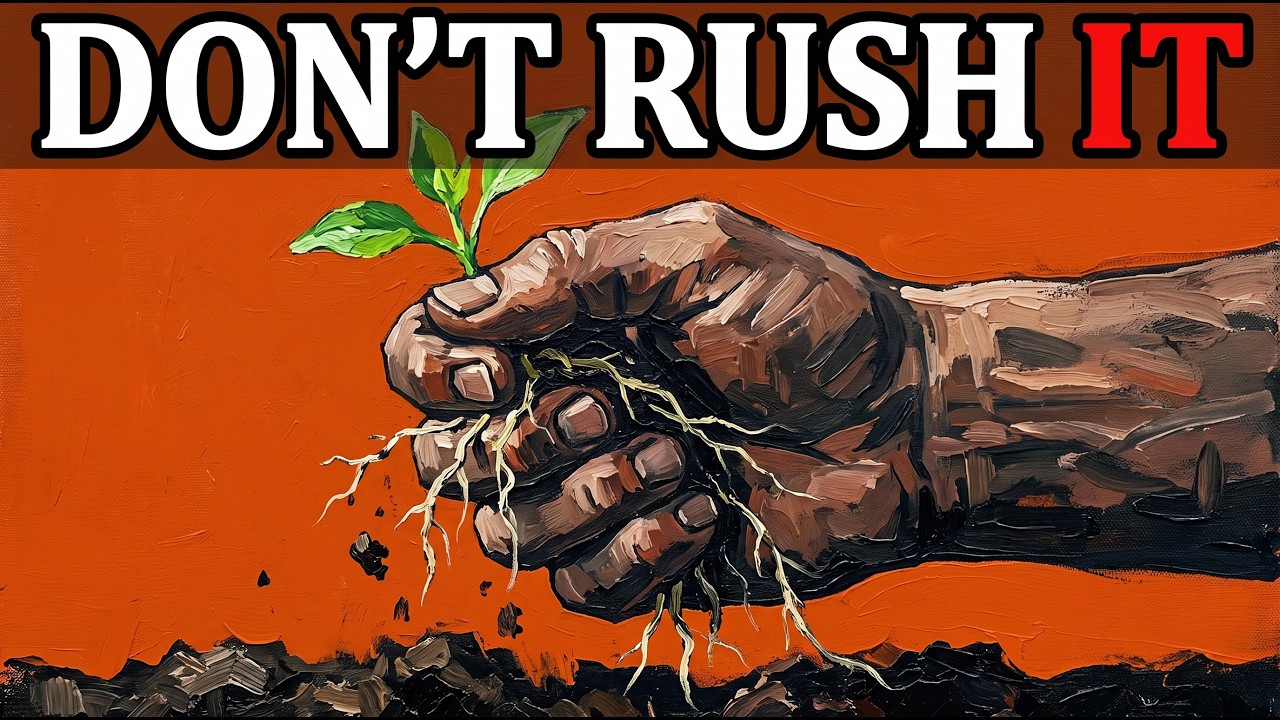
The most consistent practical warning in the entire alchemical corpus is not about ingredients or apparatus. It is about heat. Text after text tells the reader not to force the fire — and this episode asks why a body of literature supposedly concerned with making gold spends so much of its length telling people to slow down.
We begin with the puffers: the souffleurs, the bellows-workers, the historical population of pseudo-alchemists who tried to produce results on their own schedule and produced nothing. We examine what excessive heat actually does to material — vitrification, the fusion of everything distinct into a single unworkable mass — and why that observation translates so precisely into what happens to a person who forces their way through a psychological dissolution.
Then four modern forms of rushing: premature explanation, the geographic cure, premature identity and the inflation Jung warned about in his work on the ego and the unconscious, and what John Welwood named spiritual bypassing.
The episode closes with Maria Prophetissa — Maria the Jewess, working in Alexandria between the first and third centuries, known to us through Zosimos — and the apparatus named after her: the balneum Mariae, the water bath, a technology whose entire purpose is to make excessive heat physically impossible.
Episode 2 of THE GREAT WORK, a twenty-four part series on the operations of psychological alchemy.
- C.G. Jung, Psychology and Alchemy (Collected Works vol. 12, 1944) - C.G. Jung, Mysterium Coniunctionis (Collected Works vol. 14, 1955–56) - C.G. Jung, Two Essays on Analytical Psychology (CW 7) — "The Relations Between the Ego and the Unconscious" - Zosimos of Panopolis, on Maria Prophetissa (3rd–4th c. CE) - Marie-Louise von Franz, Alchemy: An Introduction to the Symbolism and the Psychology (1980) - Edward F. Edinger, Anatomy of the Psyche: Alchemical Symbolism in Psychotherapy (1985) - John Welwood, on spiritual bypassing (Journal of Transpersonal Psychology, 1984)
This video is educational and historical. It describes how alchemical and psychological traditions have interpreted human experience. It is not medical or psychological advice, not a diagnosis, and not a substitute for care from a qualified mental health professional. If you are struggling, please contact a licensed practitioner or a crisis line in your country.
The Hermetic School produces original educational essays on the history of Western esotericism and its reception in analytical psychology. Every script is researched and written from the primary sources listed above. We distinguish throughout between what a historical text says and how twentieth-century psychology reinterpreted it.
Go Deeper
Watch the complete teaching with visual symbolism and guided reflection on our YouTube channel.
Watch on YouTube Explore Ebooks